|
|

|
|
|
Major NDIS Reforms Update
The NDIS (Securing the NDIS for Future Generations) Bill 2026 has passed Parliament, following a series of amendments agreed on 18 August 2026.
The legislation represents a substantial reshaping of the NDIS over the next several years, with changes affecting participant eligibility, planning and budgets, provider oversight, claims and payments, and the delivery of some supports.
AAPi is very conscious of the uncertainty, concern and significant public debate surrounding these reforms, and of the very real impact this period is having on NDIS participants, their families and the psychologists and other professionals who support them.
Read our full member update for an overview of AAPi’s advocacy efforts to push for changes to the Bill and stronger protections for participants, detailing the key components of the Bill, implementation timeline and what the changes mean for psychologists.
|
|

|
|
Early Childhood Intervention and Thriving Kids
This week, AAPi participated in a NDIA consultation examining the Early Childhood Intervention (ECI) market and the transition toward Thriving Kids.
The NDIA has engaged Nous Group to analyse the current ECI market, identify risks associated with upcoming reforms, and consider what government action may be needed to maintain market stability, workforce capacity and access to high-quality, evidence-based supports.
As much of the consultation took place in small-group discussions, we are limited in what we can report in detail. However, AAPi raised several significant issues that will be important as the reforms progress.
Key concerns raised
A major concern was the potential impact on the workforce and the market during the transition from NDIS-funded ECI supports to Thriving Kids. We raised the significant difference between current NDIS plan funding for some children and the substantially lower levels of funding anticipated under Thriving Kids, as well as the lack of other funding sources to fill this gap. There is concern that, without careful transition planning, this could affect the viability of existing providers, contribute to workforce loss and ultimately reduce children's access to experienced clinicians.
Other issues raised included:
- the risk of further fragmentation between the health, education and disability systems, with the burden on families repeating their stories and navigating different services;
- accessibility barriers for culturally and linguistically diverse families, parents with disability, and families who may have limited capacity to navigate complex service systems;
- impacts on regional, rural, and remote communities, as well as on border communities straddling different states/territories;
- the need to ensure children have access to appropriately experienced clinicians to reduce the risk of inappropriate interventions due to misdiagnosis or inappropriate case conceptualisation;
- ensuring group programs and other interventions commissioned through Thriving Kids are delivered by appropriately qualified and experienced professionals; and,
- the importance of adequate funding for existing providers to undertake meaningful handover and transition work with children and families.
What could support a successful transition?
There was strong support for more interconnected models of care, including multidisciplinary team care and better integration between medical, allied health, social and community supports. Stronger advocacy and navigation assistance for families were also identified as important enablers.
AAPi advocated for a slow, graduated transition, rather than an abrupt shift, to reduce the risk of market disruption and to allow providers and the workforce time to adapt.
There was also discussion about supporting families to understand, with a greater focus on functional outcomes rather than measuring support primarily through therapy hours or funding amounts. Importantly, this needs to be accompanied by accessible, high-quality services and sufficient capacity for existing providers to transition children safely into new arrangements.
AAPi also stressed the importance of meaningful involvement of allied health professionals in the design and delivery of Thriving Kids services, including through commissioning arrangements that recognise professional qualifications, experience and the need for specialised interventions.
What happens next and we need your input
Nous Group will now undertake more detailed analysis of market risks, including analysis at the SA3 geographic level to identify potential local changes in provider availability and workforce capacity.
AAPi has been invited AAPi to provide further feedback. We have prepared a short survey to gather additional input on this opportunity.
If you work with young children and families, particularly within the NDIS or early childhood intervention sector, we encourage you to share your experiences and concerns with AAPi via this short survey.
This is a rapid feedback period, and we do ask for your input ASAP.
We are particularly interested in practical examples of what is currently working, where families experience barriers, potential impacts on workforce or service viability, and what safeguards will be needed to ensure children continue to receive appropriate psychological and multidisciplinary support during the transition to Thriving Kids.
AAPi will collate member feedback and provide it to Nous as part of our ongoing advocacy.
We will also continue this discussion with members and our broader engagement with the NDIA and government as the reforms develop.
|
|
|

|
|
Women Struggling to Access Mental Health Services
AAPi Executive Director Tegan Carrison was quoted in an article in Health Services Daily highlighting the high rates of psychological distress amongst Australian women and the barriers they face when accessing mental health support. A new survey of 9000 women by Women’s Mental Health Australia found that one in two women had mental health issues and one in four experienced “severe psychological distress”. Tegan emphasised that cost should not be one of the barrier's preventing women from accessing a psychologist when they need help, calling for Medicare rebates to be increased to $150 for all psychology appointments. She also highlighted the impact of financial stress, caring responsibilities, violence, and hormonal and reproductive health issues on women’s mental health.
|
Parenting Pressure and the Impact of Information Overload
AAPi Director Daniela McCann was featured in an article syndicated across Nine newspapers, including The Sydney Morning Herald, The Age, Brisbane Times and WAtoday, examining the growing pressures facing parents and why raising children can feel harder than ever. Daniela highlighted how the constant stream of expert advice, information and social comparison around child development can be overwhelming for parents. “While that greater knowledge can be really beneficial, the downside is it creates pressure and anxiety; thinking that the standards of good parenting are exceptionally high and mistakes have long-term consequences.” She also pointed to how the role of parenting has expanded, with parents increasingly expected to act as caregivers, educators, digital safety monitors, emotion coaches and advocates.
|
|
|

|
|
|
The Department of Health, Disability and Ageing is seeking feedback on proposed changes to new framework planning and NDIS supports as part of the Australian Government’s broader reforms to protect the NDIS for people with permanent and significant disability.
The consultation focuses on four proposed new NDIS rules covering:
- how a participant’s disability support needs will be assessed
- how reasonable and necessary budgets will be developed
- how participants can use their plan
- how a new framework plan can be changed.
Feedback is also being sought on proposed updates to the NDIS Supports Transitional Rule.
The consultation is open to people with disability, families, carers and kin, disability representative organisations and advocates, disability service providers, health professionals and disability support workers.
A range of consultation resources are available, including detailed consultation materials, easy-read resources and Auslan videos.
Have your say by submitting a written response, answering the consultation questions online, providing a video response, requesting a phone call, or emailing NDISConsultations@health.com.au.
Exposure drafts of all eight new framework planning rules are expected to be available for further consultation later this year.
|
|
|
|
A new self-paced training is available for NSW primary care and mental health professionals supporting people experiencing mental health concerns or suicidal distress.
The training builds practical skills and confidence to include family, friends and carers in safe and meaningful ways, with a focus on culturally responsive, strengths-based practice.
Learn how to:
- Recognise the varied roles of family, friends and carers
- Communicate clearly and respectfully
- Navigate consent, confidentiality and information sharing
- Support carer stress, burnout and wellbeing
- Apply inclusive practice through real-world scenarios
The training takes approximately 60–90 minutes to complete and includes contributions from AAPi Chief Psychologist Amanda Curran.
|
|
|
|
|
The University of New South Wales (UNSW) has completed an independent review of the evidence on the use of medicinal cannabis for chronic non-cancer pain in veterans. Drawing on the review and consultation with clinical experts, UNSW has developed an Evidence Report and Clinical Guidance to support healthcare providers, veterans and families.
The guidance supports healthcare providers in decisions about the initiation, monitoring and discontinuation of medicinal cannabinoid therapy, with a focus on informed, patient-centred and practical care. The resources also support conversations between healthcare providers, veterans and families about medicinal cannabis, including how it may be used and what to expect from treatment.
The resources complement recent updates to DVA’s Medicinal Cannabis Framework and aim to support safe, high-quality care for veterans.
|
|
|
|
|
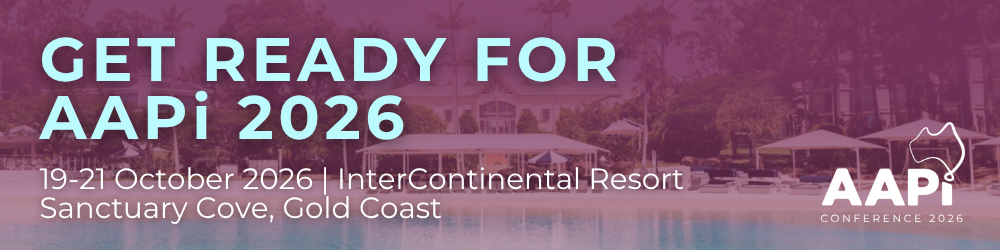
The excitement is building…and there are now just 61 days to go until AAPi’s 2026 National Conference!
Wondering what you can expect at the AAPi 2026 Conference?
This year, we’ve added even more to what's on offer for your conference experience:
- Optional morning yoga on Tuesday 20 October to kick start your conference.
- A Yarning Circle on the morning of Wednesday 21 offering an opportunity for Indigenous psychologists, as well as anyone interested in joining the conversation, to come together and yarn about their current or prospective work with Indigenous clients.
- A beautiful low sensory space, proudly supported by James Cook University, Murtupuni Centre for Rural and Remote Health, Supervisor Training Program.
- Puppies! Smart Pups will be joining us on the Tuesday to share about the incredible work of Smart Pups Assistance Dogs.
- Barista coffee! Enjoy freshly made barista coffee during the breaks to keep you fuelled and refreshed. Proudly supported by LogSnob.
- Our amazing Gala Dinner with the fabulous Franky Smart bringing the energy, entertainment and plenty of reasons to hit the dance floor.
- An amazing line-up of pre-conference workshops for those wanting to dive deeper.
- A packed conference program covering timely topics, emerging issues and practical insights you can take straight back into your work.
All of this in a beautiful resort setting, offering the perfect opportunity to learn, connect and also enjoy some much-needed downtime.
This isn’t just another conference. It’s three enriching days of expansion, connection and inspiration.
Register today to join us at the Gold Coast, we can’t wait to see you there!
|
|
AAPi members can access exclusive insurance benefits through our preferred insurance partner, insurance.com.au, including Professional Indemnity, Public, Products and Cyber Liability Insurance. To find out more about the benefits available to our members including reduced rates and complimentary cover for eligible students and provisional psychologists head to our website.
|
|
|

|
|
WA: Thriving Kids Family and Children Support Program
Grants are now open for the WA Government’s Thriving Kids Family and Children Support Program.
Up to $52 million in grant funding is available to support community-led initiatives for children aged eight and under with developmental concerns, delay or autism and their families. Grants of $250,000 to $2 million will fund new or expanded community-based services that build family capability, strengthen peer and community connections, improve access to early supports and provide culturally safe supports and services, including Aboriginal-led initiatives.
Funding is intended for group, workshop, peer and family support programs rather than individual therapeutic services, with applications open to eligible not-for-profit community organisations, local governments and community groups.
|
|
NSW Government Accepts Recommendations from Bondi Junction Coronial Inquest
The NSW Government has accepted all recommendations directed to it following the Bondi Junction Coronial Inquest. The recommendations include rolling out a new health-led response model for mental health emergencies, strengthening community mental health services and support pathways for people with severe and complex mental illness, and improving coordination between emergency services.
|
|
|
|
|
|
|
|